
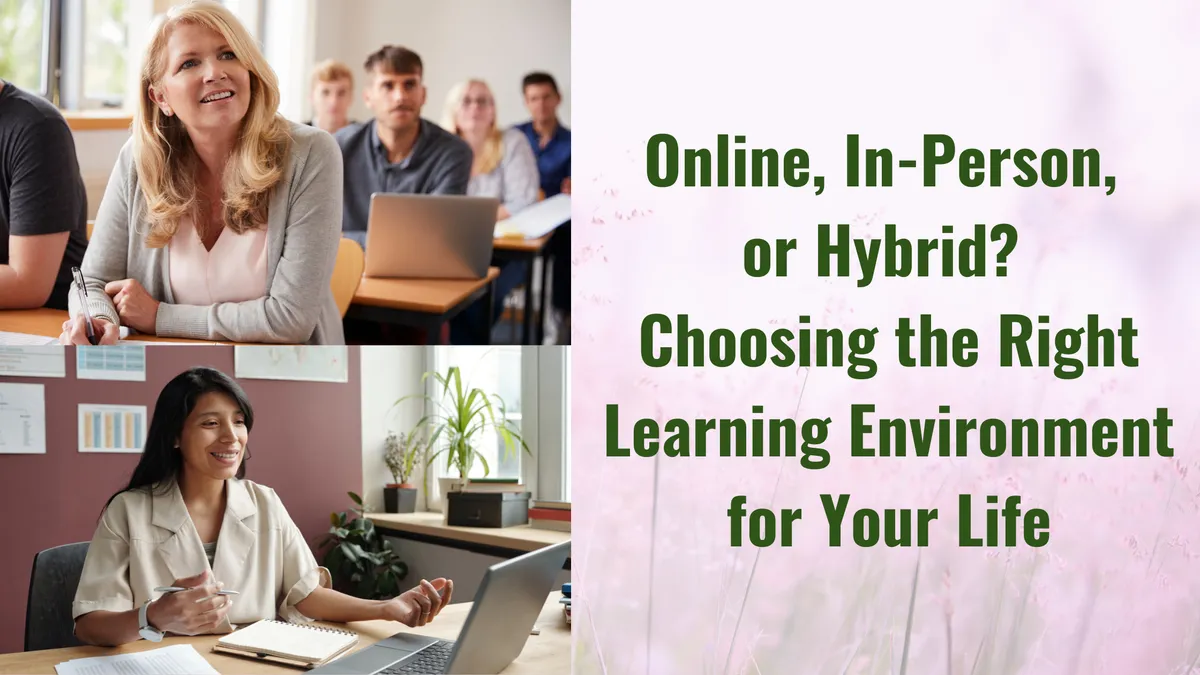
Online, In-Person, or Hybrid? Choosing the Right Learning Environment for Your Life
Introduction
Choosing to return to school or continue your education is a significant decision. But choosing how you will learn is just as important.
Today, learners have more options than ever before. You are no longer limited to traditional classrooms. Instead, you can choose between online, in-person, or hybrid learning environments.
Each option has its own strengths and challenges. The right choice depends on your lifestyle, goals, learning style, and personal responsibilities.
For adult learners especially, selecting the right environment can make the difference between struggling through education and thriving in it.
This guide will help you understand each option clearly so you can make a confident and informed decision.
Understanding Online Learning
Online learning has become one of the most popular education formats, especially for adults balancing work, family, and personal responsibilities.
It offers maximum flexibility, allowing you to study from anywhere at any time.
With platforms and programs delivered through institutions and tools like Coursera, edX, and similar online learning systems, students can access high-quality education without physically attending a classroom.
Key Benefits of Online Learning
Flexible schedule (study anytime, anywhere)
No commuting required
Ability to learn at your own pace
Possibility of accelerating learning, saving time and money
Access to a wide variety of programs globally
Easier to balance with work or family life
Challenges of Online Learning
However, online learning also requires a strong sense of discipline and self-motivation.
Common challenges include:
Staying consistent without a fixed schedule
Navigating through rigorous proctored environments
Feeling isolated from peers
Managing distractions at home
Limited face-to-face interaction with instructors
Online learning works best for individuals who are self-driven, organized, and comfortable learning independently.
If you are able to manage your time effectively, this option offers unmatched flexibility.
Exploring In-Person Learning
In-person learning is the traditional classroom experience where students attend physical classes on campus.
This environment provides structure, routine, and direct interaction with instructors and peers.
For many learners, especially those who thrive on accountability and structure, this format can be highly effective.
Key Benefits of In-Person Learning
Direct interaction with instructors
Real-time feedback and discussion
Strong sense of community and connection
Access to physical campus facilities such as libraries and labs
Structured schedule that supports consistency
Challenges of In-Person Learning
Despite its benefits, in-person learning may not suit everyone, especially adult learners with busy schedules.
Challenges include:
Fixed class schedules with less flexibility
Time spent commuting
Difficulty balancing work or family responsibilities
Higher costs in some cases
In-person learning is ideal for individuals who prefer structure, face-to-face interaction, and a more traditional academic environment.
It also works well for those who need external accountability to stay on track.
The Benefits of Hybrid Learning
Hybrid learning combines elements of both online and in-person education. It offers a balanced approach that is increasingly popular among modern learners.
In a hybrid setup, students typically attend some classes in person while completing other parts of the coursework online.
Key Benefits of Hybrid Learning
Flexibility combined with structure
Reduced time spent on campus
Opportunity for both independent and collaborative learning
Better work-life-school balance
Exposure to both digital tools and in-person interaction
Hybrid learning is especially helpful for students who want flexibility but still value personal interaction and accountability.
Challenges of Hybrid Learning
While balanced, hybrid learning also requires adaptation:
Managing both online and in-person schedules
Staying organized across different platforms
Adjusting to multiple learning formats
This model is ideal for learners who want the best of both worlds and are comfortable switching between independent and structured learning environments.
Aligning with Your Lifestyle and Goals
Choosing the right learning environment is not just about preference, it is about alignment with your current lifestyle and long-term goals.
Ask yourself:
How much time do I realistically have for study?
Do I need flexibility or structure?
Do I learn better independently or in groups?
How well do I manage stress of proctored exams?
What are my personal and professional responsibilities?
For example:
If you are working full-time or managing family responsibilities, online learning may provide the flexibility you need.
If you thrive in structured environments and need accountability, in-person learning may suit you better.
If you want a balance between both, hybrid learning may be the ideal middle ground.
There is no “perfect” option—only the option that best supports your current season of life.
Making an Informed Decision
Before making your final decision, take time to research and reflect.
You can:
Get informed! Compare program formats and requirements
Speak with academic advisors or admissions staff
Ask current students about their experiences
Consider trial courses or orientation sessions
It is also helpful to reflect on your past learning experiences. Think about what worked well for you, and what did not.
The goal is not to choose the most popular option, but the one that allows you to succeed with less stress and more confidence.
Education is most effective when it fits your life, not when your life has to constantly adjust to it.
Conclusion
Choosing between online, in-person, and hybrid learning is an important step in your educational journey. Each option offers unique advantages, and the best choice depends on your individual needs, lifestyle, and goals.
Online learning provides flexibility and independence. In-person learning offers structure and connection. Hybrid learning combines both for a balanced experience.
There is no single right answer—only the right fit for you.
By understanding your priorities and evaluating your options carefully, you can choose a learning environment that supports not just your education, but your overall well-being and success.
The most important step is not where you learn, but that you choose a path that allows you to keep learning, growing, and moving forward.