

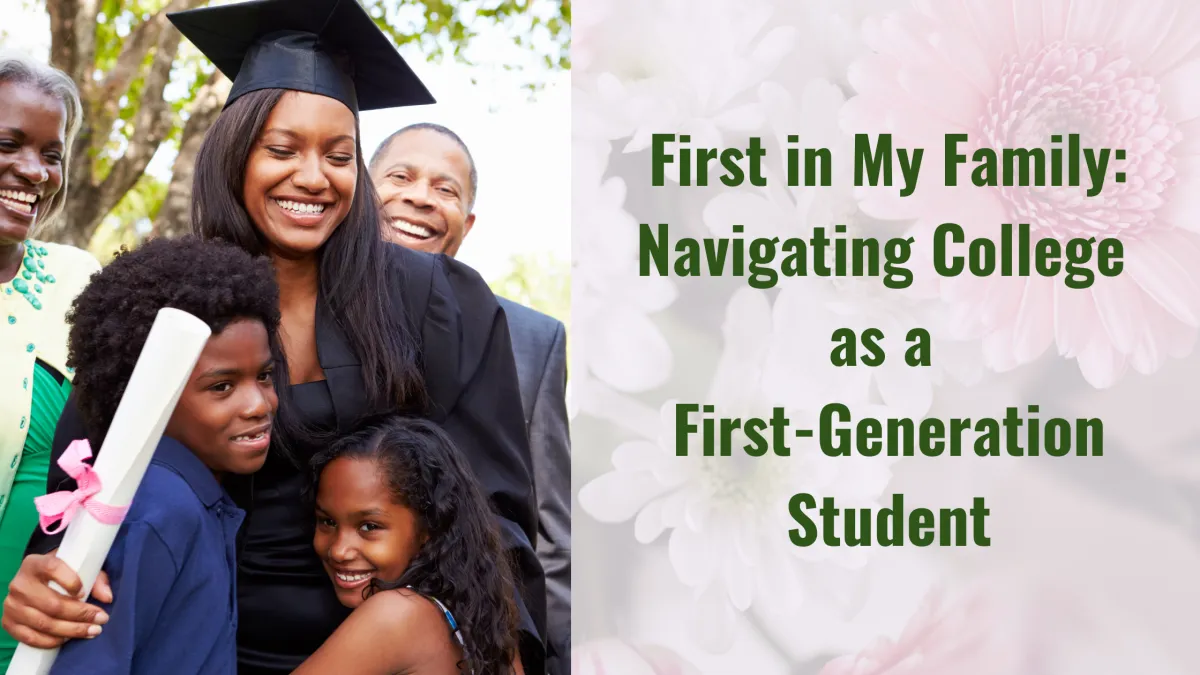
First in My Family: Navigating College as a First-Generation Student
Introduction
Being the first in your family to attend college is a powerful milestone. It represents courage, ambition, and the desire to create a better future—not just for yourself, but often for your family and the generations that follow.
However, this achievement also comes with unique challenges. Without a family roadmap for higher education, many first-generation students find themselves navigating unfamiliar systems, expectations, and environments on their own.
From understanding enrollment processes to adjusting to academic culture, the journey can feel overwhelming at times. Yet, it is also deeply transformative.
This experience is not just about earning a degree. It is about breaking barriers, redefining possibilities, and becoming a trailblazer in your family’s story.
If you are a first-generation student, this guide will help you navigate college with clarity, confidence, and support.
Understanding the First-Generation Experience
First-generation college students often carry a mix of pride and pressure.
On one hand, there is pride in being the first to open doors that may have once seemed out of reach. On the other hand, there can be uncertainty due to limited exposure to how college systems actually work.
Common challenges include:
Navigating admissions and enrollment processes alone
Understanding academic expectations and grading systems
Feeling out of place among peers with more familiarity
Balancing family responsibilities with academic demands
Experiencing “imposter syndrome” or self-doubt
Despite these challenges, first-generation students bring incredible strengths to the table—resilience, adaptability, determination, and real-world perspective.
You are not behind. You are pioneering a path that did not exist before you.
That alone is a powerful foundation for success.
Utilizing Campus Resources
One of the biggest advantages in college is the availability of support systems—yet many students, especially first-generation learners, do not fully use them.
Campus resources are designed specifically to help you succeed. These may include:
Academic tutoring centers
Writing and math labs
Library research support
Career counseling services
Academic advisors and faculty mentors
Using these resources is not a sign of weakness. It is a sign of strategy.
Many successful students actively seek help early rather than waiting until they struggle. Asking questions, attending office hours, and seeking clarification are all part of the learning process.
Mentors and advisors can also help you:
Choose the right courses
Understand degree requirements
Explore career paths
Navigate academic challenges
Network and build a community that supports your success
The more you engage with these resources, the more confident and prepared you become.
Building a Supportive Community
College is not meant to be a solo journey.
For first-generation students, building a sense of community is especially important because it helps reduce feelings of isolation and self-doubt.
You can create your support system by:
Joining first-generation student organizations
Participating in campus clubs and activities
Attending orientation programs and workshops
Connecting with classmates who share similar goals
Engaging with student success centers or mentoring programs
Being surrounded by people who understand your journey can make a significant difference in your confidence and motivation.
You may also find comfort in connecting with students who are facing similar challenges. These relationships often become a source of encouragement, accountability, and lifelong friendship.
Remember: belonging is built through connection, not perfection.
Managing Expectations and Pressure
One of the most complex parts of being a first-generation student is balancing expectations—both personal and external.
Many students feel pressure to succeed not only for themselves, but also for their families who may have made sacrifices to support their education. While this motivation can be powerful, it can also become overwhelming.
You may find yourself trying to:
Maintain high academic performance
Support family responsibilities
Work part-time jobs
Manage emotional expectations from loved ones
Without balance, this pressure can lead to stress and burnout.
It is important to communicate openly with your family about your academic journey. They may not fully understand college life, but sharing your experiences can help build mutual understanding.
Equally important is learning to set boundaries and prioritize your well-being. Success is not about doing everything at once. It is about sustainable progress over time.
Your journey is important, but so is your health.
Planning for Success Beyond College
While college is a major milestone, it is also a stepping stone toward your future career.
Starting early with career planning can give you a strong advantage. You do not need to have everything figured out right away, but you can begin exploring possibilities such as:
Internships, service-learning, and part-time work opportunities
Career fairs and networking events
Resume and interview preparation
Skill-building workshops
Volunteer or leadership experiences
As a first-generation student, you bring a unique perspective to the workforce. Employers value individuals who demonstrate resilience, determination, and the ability to overcome challenges.
Your background is not a limitation. It is a strength that sets you apart.
By actively engaging in career development during college, you increase your confidence and readiness for life after graduation.
Conclusion
Being a first-generation college student is a life-changing journey filled with both challenges and opportunities.
You may face uncertainty, pressure, and moments of doubt, but you also carry something incredibly powerful: the ability to create a new path where none existed before.
By understanding your experience, using campus resources, building a supportive community, managing expectations, and planning for your future, you are setting yourself up for long-term success.
Every assignment completed, every challenge overcome, and every step forward is part of a larger story—one of growth, resilience, and transformation.
You are not just attending college. You are breaking cycles, expanding possibilities, and shaping a future that extends far beyond yourself.
And that is something worth being proud of.